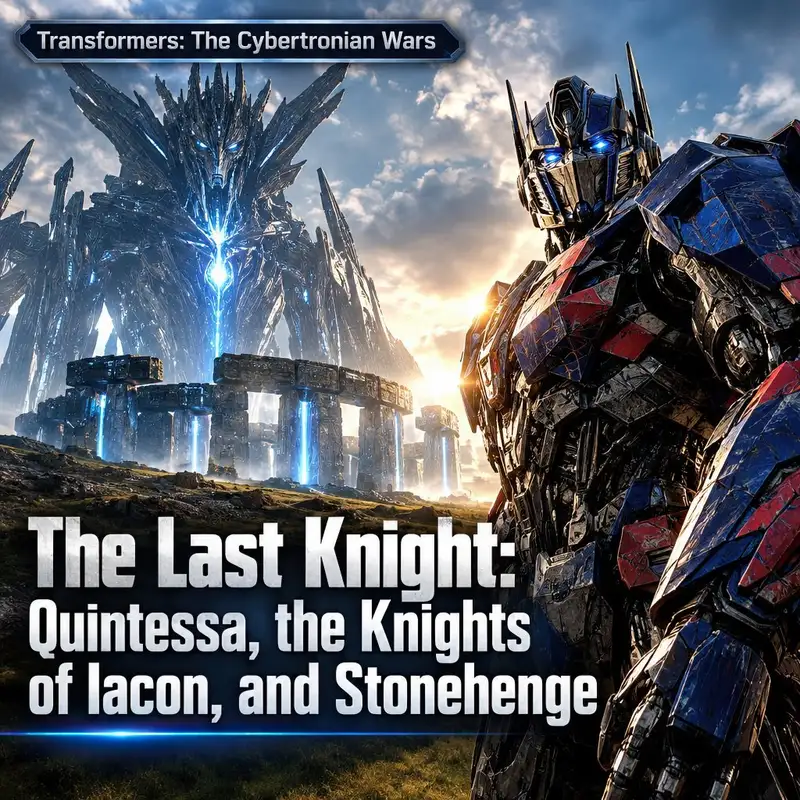
The Last Knight: Quintessa, the Knights of Iacon, and Stonehenge
The importance of The Last Knight comes from its place in the modern and parallel Cybertronian wars, where one campaign can reshape the next phase of the war. The analysis concentrates on parallel live-action warfare, human military cooperation, planetary battles, alien artifact…
The importance of The Last Knight comes from its place in the modern and parallel Cybertronian wars, where one campaign can reshape the next phase of the war. The analysis concentrates on parallel live-action warfare, human military cooperation, planetary battles, alien artifacts, and repeated efforts to control Earth as a strategic objective, with attention to what leaders can know, mobilize, sustain, and risk. The film continuities combine Cybertronian civil war with human state power, making alliances and misunderstandings with Earth’s militaries part of the battlefield. The supplied ordering and terminology are preserved so changes in doctrine, politics, technology, and factional identity accumulate naturally within each season. Placed in sequence, the topic advances the season’s concern with how multiple separate continuities reinterpret the same recurring problems of civil war, alien intervention, occupation, resistance, planetary survival, and factional identity. Victory remains conditional, measured by whether a faction preserves enough capability, energy, information, and legitimacy to shape what follows. Visit ImaginedBattlefield.com for more military and science fiction.