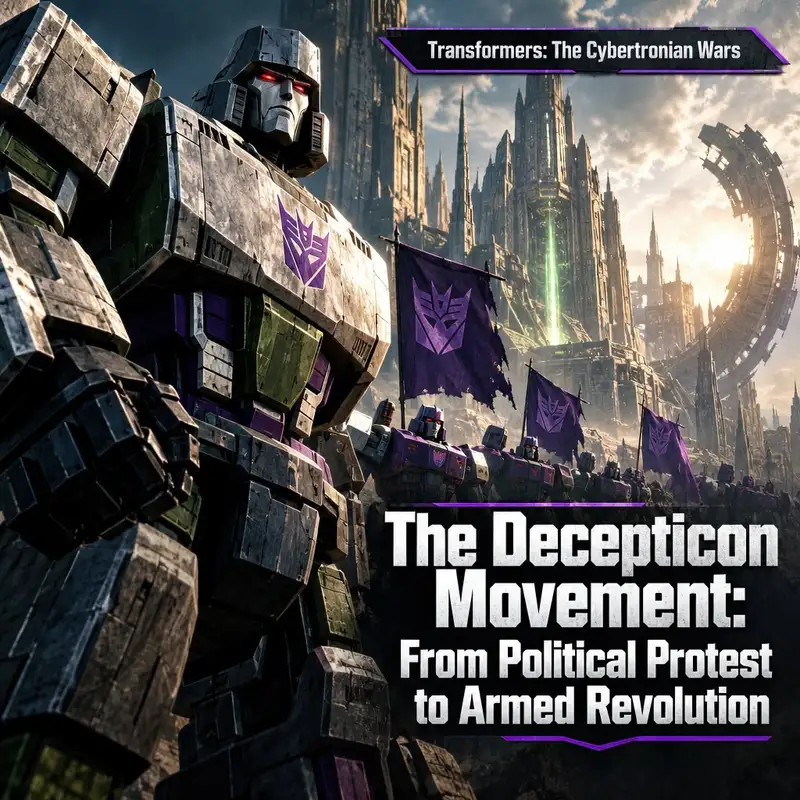
The Decepticon Movement: From Political Protest to Armed Revolution
The Decepticon Movement becomes strategically important within the 2005 IDW Great War and the post-faction era. The military frame emphasizes revolutionary mobilization, authoritarian command, grievance, political violence, and the transformation of protest into organized war, r…
The Decepticon Movement becomes strategically important within the 2005 IDW Great War and the post-faction era. The military frame emphasizes revolutionary mobilization, authoritarian command, grievance, political violence, and the transformation of protest into organized war, rather than treating the topic as disconnected franchise lore. Megatron’s rise matters because social and political conflict becomes militarized, turning reform movements into factions capable of sustaining planetary war. The discussion remains grounded in the supplied title and its exact place in the Transformers chronology. Placed in sequence, the topic advances the season’s concern with how class conflict, infiltration, environmental collapse, occupation, postwar politics, ideological fracture, and the struggle to govern after four million years of war reshape Cybertron. Civilian populations, neutral worlds, resource networks, space bridges, and planetary infrastructure remain part of the military picture because no faction can sustain war through combat units alone. Victory remains conditional, measured by whether a faction preserves enough capability, energy, information, and legitimacy to shape what follows. Visit ImaginedBattlefield.com for more military and science fiction.