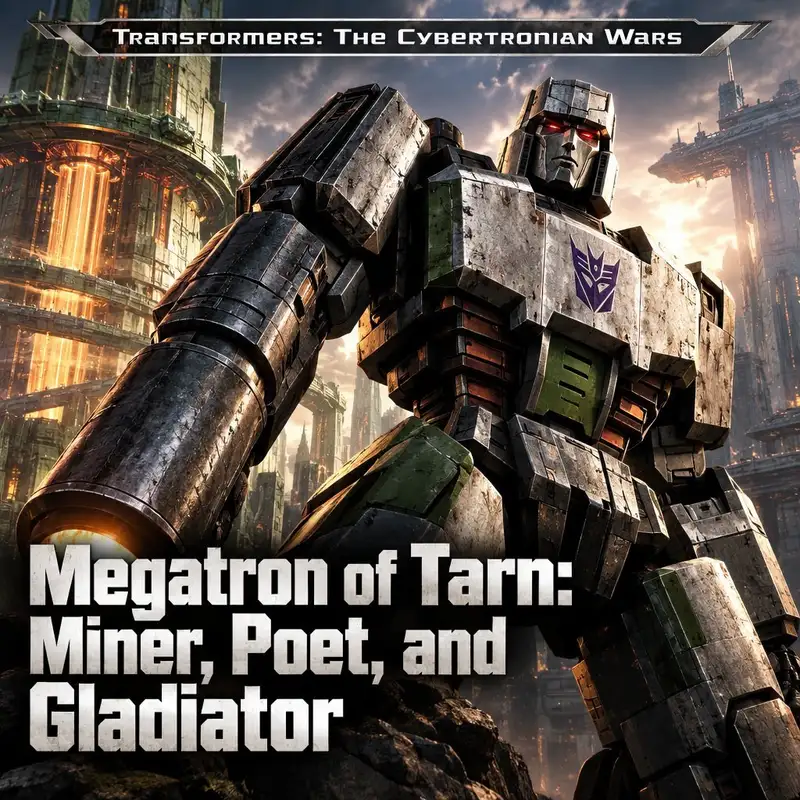
Megatron of Tarn: Miner, Poet, and Gladiator
The strategic value of studying Megatron of Tarn comes from the choices it creates inside the 2005 IDW Great War and the post-faction era. The analysis concentrates on revolutionary mobilization, authoritarian command, grievance, political violence, and the transformation of pro…
The strategic value of studying Megatron of Tarn comes from the choices it creates inside the 2005 IDW Great War and the post-faction era. The analysis concentrates on revolutionary mobilization, authoritarian command, grievance, political violence, and the transformation of protest into organized war, with attention to what leaders can know, mobilize, sustain, and risk. Megatron’s rise matters because social and political conflict becomes militarized, turning reform movements into factions capable of sustaining planetary war. The supplied chronology sets the boundary, so separate cartoon, comic, film, game, and modern continuities are not silently merged beyond what the title itself establishes. Its position matters because the wider campaign shows how class conflict, infiltration, environmental collapse, occupation, postwar politics, ideological fracture, and the struggle to govern after four million years of war reshape Cybertron. That perspective keeps the emphasis on military consequences while showing why Transformers repeatedly turns identity and ideology into strategic forces. Visit ImaginedBattlefield.com for more military and science fiction.