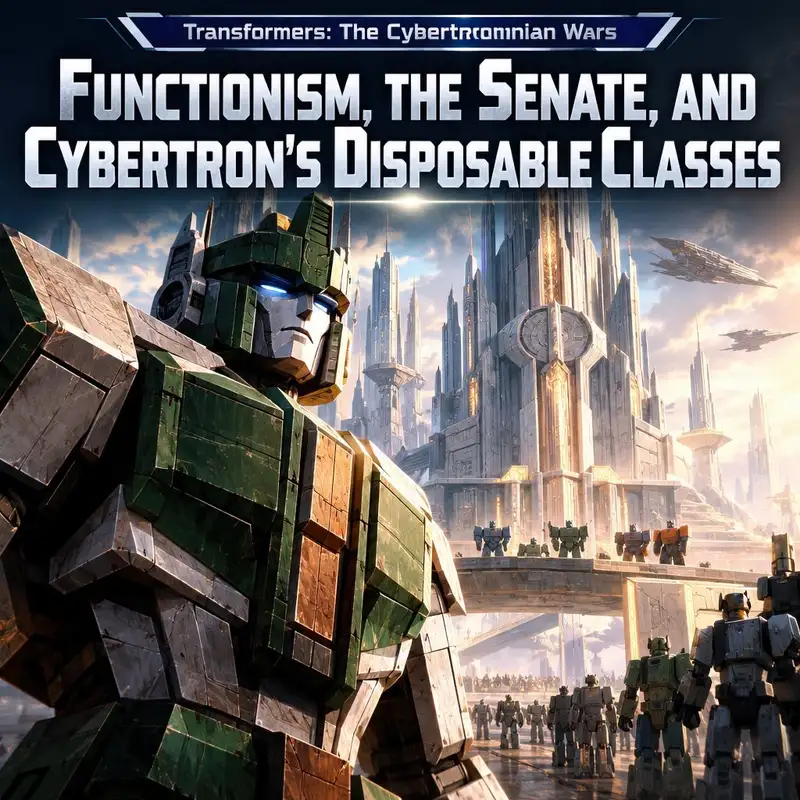
Functionism, the Senate, and Cybertron’s Disposable Classes
Functionism, the Senate, and Cybertron’s Disposable Classes reveals a recurring pressure within the 2005 IDW Great War and the post-faction era: every military solution creates new political, technological, or logistical problems. At the center is planetary geography, Energon su…
Functionism, the Senate, and Cybertron’s Disposable Classes reveals a recurring pressure within the 2005 IDW Great War and the post-faction era: every military solution creates new political, technological, or logistical problems. At the center is planetary geography, Energon supply, interworld movement, and the logistical importance of transport routes and resource access, linking tactical choices to the ability of armies, governments, or resistance movements to continue operating. Cybertronian warfare is inseparable from Energon and mobility, because armies that cannot move, refuel, or sustain planetary operations eventually lose strategic freedom. The supplied ordering and terminology are preserved so changes in doctrine, politics, technology, and factional identity accumulate naturally within each season. The surrounding chronology ultimately demonstrates how class conflict, infiltration, environmental collapse, occupation, postwar politics, ideological fracture, and the struggle to govern after four million years of war reshape Cybertron. The broader lesson is that battlefield superiority remains fragile when Energon, information, alliances, or command cohesion fail beneath it. Visit ImaginedBattlefield.com for more military and science fiction.