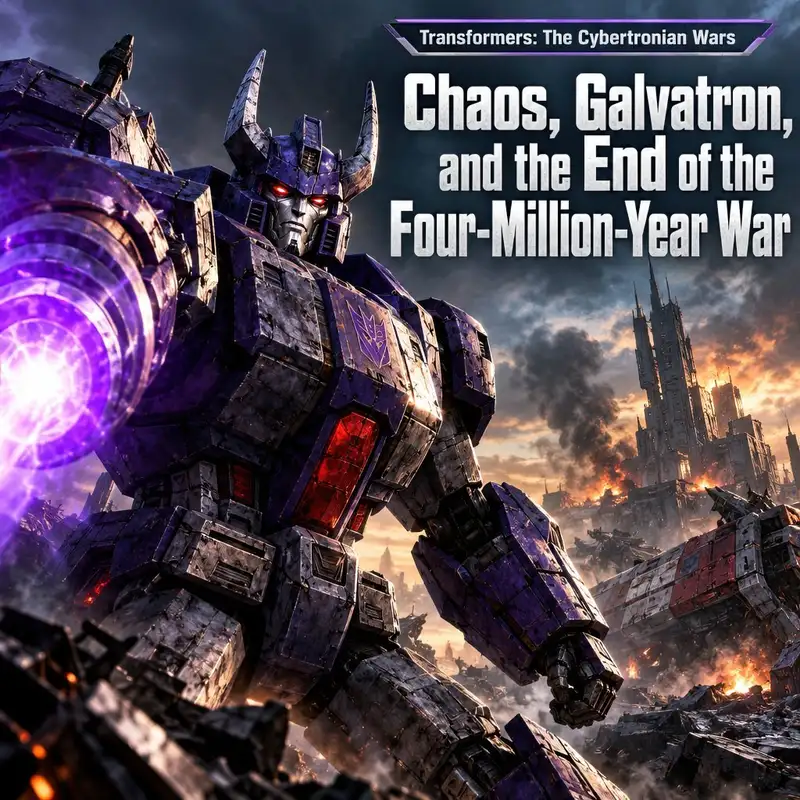
Chaos, Galvatron, and the End of the Four-Million-Year War
Chaos, Galvatron, and the End of the Four-Million-Year War turns part of the 2005 IDW Great War and the post-faction era into a concrete problem of command, survival, and political judgment. That makes decapitation, succession, planetary battle, morale, and the strategic shock c…
Chaos, Galvatron, and the End of the Four-Million-Year War turns part of the 2005 IDW Great War and the post-faction era into a concrete problem of command, survival, and political judgment. That makes decapitation, succession, planetary battle, morale, and the strategic shock created when iconic leaders fall during a major campaign central to understanding the immediate crisis and the wider campaign around it. Leadership loss matters because faction identity and command cohesion can collapse or transform when political legitimacy is concentrated in a few symbolic figures. The discussion remains grounded in the supplied title and its exact place in the Transformers chronology. Placed in sequence, the topic advances the season’s concern with how class conflict, infiltration, environmental collapse, occupation, postwar politics, ideological fracture, and the struggle to govern after four million years of war reshape Cybertron. Seen this way, the episode connects combat power to logistics, intelligence, legitimacy, technology, and political purpose. Visit ImaginedBattlefield.com for more military and science fiction.