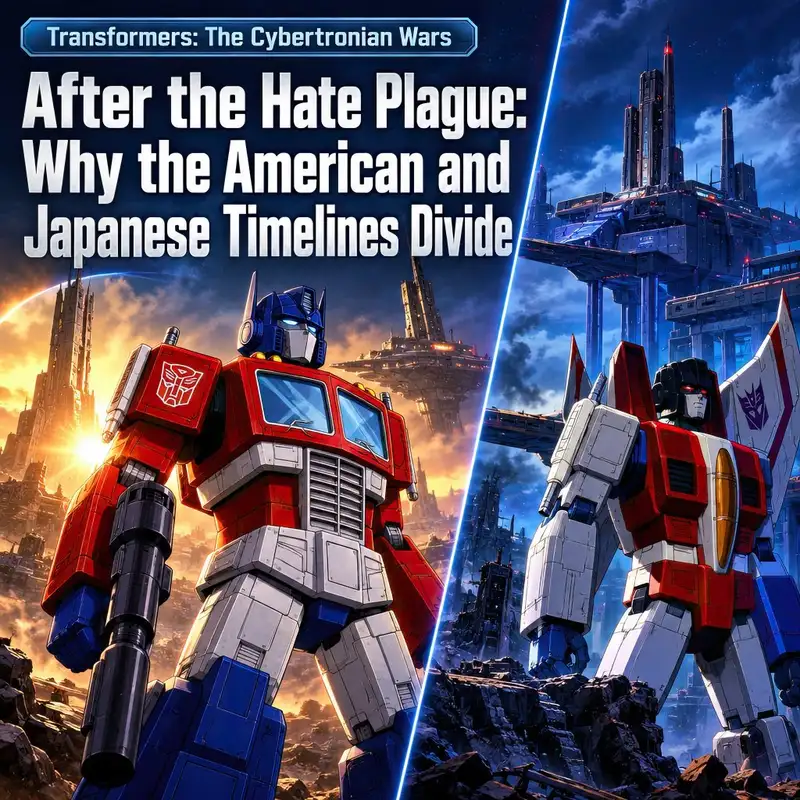
After the Hate Plague: Why the American and Japanese Timelines Divide
The military significance of After the Hate Plague is clearest when placed inside Japanese Generation One and the Beast Era. The episode focuses on continuity, alternate timelines, source traditions, and the need to keep separate Cybertronian wars from being silently merged, sho…
The military significance of After the Hate Plague is clearest when placed inside Japanese Generation One and the Beast Era. The episode focuses on continuity, alternate timelines, source traditions, and the need to keep separate Cybertronian wars from being silently merged, showing why the subject matters beyond the immediate battle, faction, or character. Transformers repeatedly reuses names, factions, and technologies across distinct histories, so military analysis depends on preserving which continuity each event belongs to. The supplied ordering and terminology are preserved so changes in doctrine, politics, technology, and factional identity accumulate naturally within each season. Placed in sequence, the topic advances the season’s concern with how postwar fragmentation, new factions, transwarp movement, historical intervention, techno-organic change, and competing timelines transform the legacy of the original war. The broader lesson is that battlefield superiority remains fragile when Energon, information, alliances, or command cohesion fail beneath it. Visit ImaginedBattlefield.com for more military and science fiction.